ServicesConstruction Debris
Construction Debris Removal in Rio Vista
Your remodel left a pile of drywall, broken tile, old cabinets and nail-studded lumber. We load it by hand, keep heavy materials separate so they go to the right facility, and sweep up before we drive off. You get the price on site before any work starts.
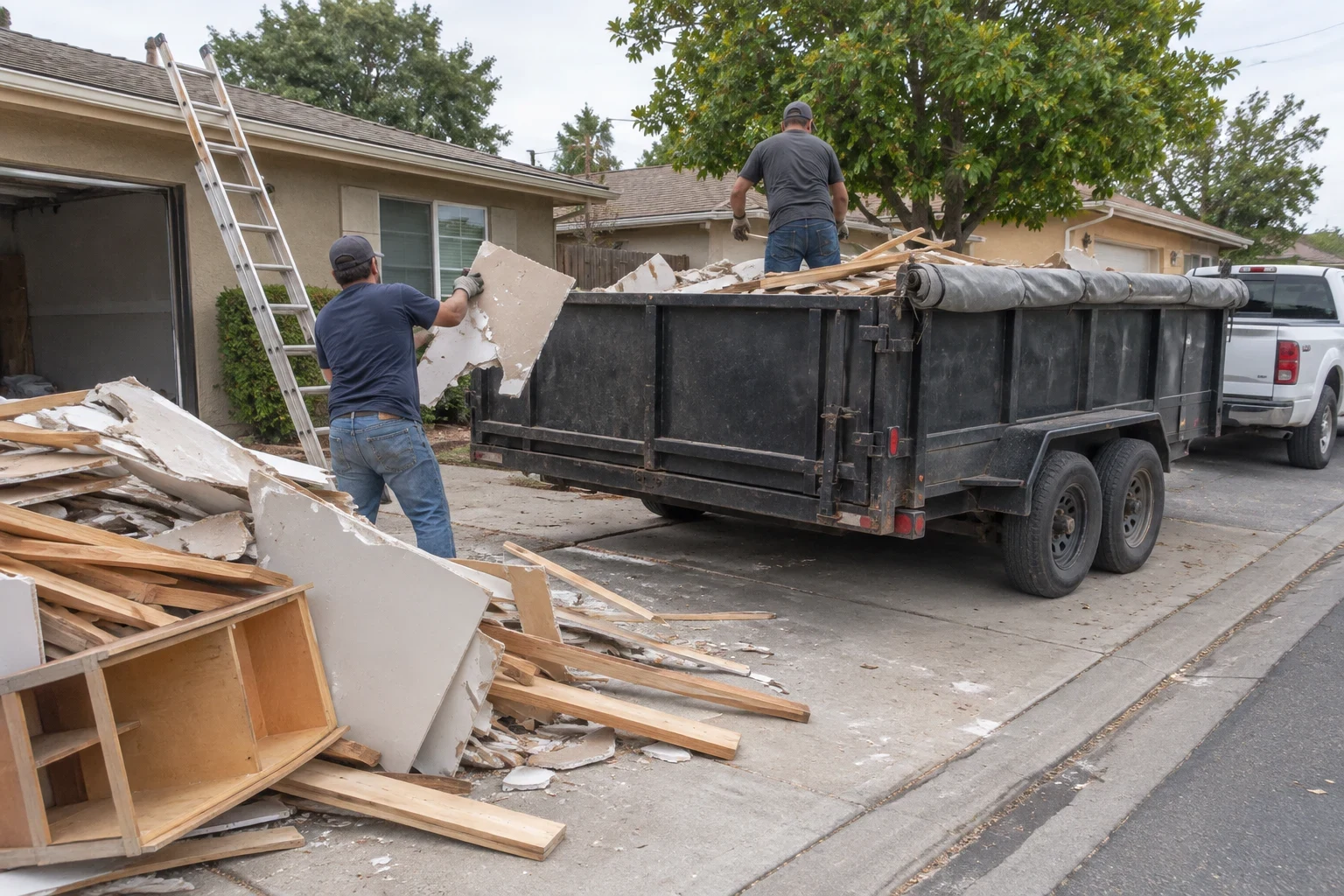
What construction debris removal covers
Construction debris is the waste a building project leaves behind: gypsum drywall offcuts, framing lumber, plywood, tile and the thinset stuck to it, concrete, plaster, roofing shingles, old cabinets, fixtures and carpet with its pad. It differs from household junk in two ways. It is heavy for its size, and much of it is sharp, with nails, screws and broken edges.
This service fits when a contractor finished but left the haul-off to you, when you did the work yourself, or when a project stalled and the pile is starting to take over the side yard. If you still need something torn out first, such as a deck or an interior wall, see our light demolition page. For a whole shed, see shed removal.
Remodel materials we take, and the care each one needs
- Drywall and plaster
- Sheetrock is heavy for its thickness and turns to fine white powder when it gets tossed. Small scraps go into bags and full sheets get stacked flat, which keeps the dust in the truck bed instead of on your driveway.
- Lumber with fasteners
- Demo lumber usually still has nails sticking out. We handle it with gloves, load it points-down and pick up loose nails and screws from the work area with a magnet sweeper.
- Tile, concrete and masonry
- Broken tile, mortar, pavers and concrete chunks weigh far more than their size suggests. We load them in measured amounts so the truck stays within its weight limit, and keep clean concrete separate where a recycler will take it.
- Roofing and flooring tear-out
- Asphalt shingles, underlayment, carpet and pad, and laminate or vinyl plank flooring all go. Old flooring is often bulky but light, so it is priced mostly on the space it takes up.
- Cabinets, fixtures and doors
- Kitchen and bath tear-outs leave cabinet boxes, countertops, sinks, toilets and old doors. We carry them out whole when we can, which is faster than breaking them up in your home.
- Sweep-up when we finish
- Our clean-space guarantee covers this work: we sweep up the area, and if we missed anything, we come back to get it at no charge.
When a debris pile has sat long enough
Gates and walkways are blocked
Scrap leaned against a side gate or spread across a path slows the next trade down and gives anyone walking by something to trip on.
Nails and screws are working loose
As a pile gets moved around, fasteners fall out and land in the gravel or grass. The longer it sits, the more of them end up in tires and shoes.
Drywall has gotten wet
Gypsum soaks up water from rain or sprinklers, gets heavier, and breaks down into a paste. Wet drywall is harder to load and can stain concrete underneath it.
Your bin is full and the work is not
If a rented dumpster filled faster than planned, a truckload can clear the overflow without waiting on a second bin to be delivered.
The project needs a final inspection
Inspectors want a clear path to the work. Removing debris before the final visit avoids having to reschedule.
What sets the price for hauling remodel waste
Construction debris is priced mainly on how much truck space it fills, then adjusted for weight, because dump facilities charge heavy loads by the ton. We look at the actual pile before quoting, so the number reflects your material and not a guess over the phone. The price we quote on site is the price you pay, with no hidden fees added later.
Volume
The share of the truck the debris fills is the starting point. Bulky but light material like carpet or empty cabinet boxes is priced mostly on space.
Weight of the material
Concrete, tile, plaster and wet drywall can hit a truck's weight limit long before the bed is full. A small heap of broken concrete may cost more to dispose of than a large stack of lumber.
How far we carry it
A pile stacked by the driveway goes into the truck in minutes. Debris in a backyard behind a narrow side gate, or still upstairs inside your home, means more trips on foot and more labor.
How mixed the load is
A pile of one material goes straight to one facility. A pile mixing drywall, metal, concrete and trash takes time to sort before it can be recycled or dumped.
How the job day runs
- 1
Look at the pile and quote it
We come out, look at what is there and note anything heavy, like concrete or wet tile. You hear the number and decide before anyone lifts a single board.
- 2
Check for problem materials
Some materials need special handling, such as paint, solvents or suspected asbestos in old popcorn ceiling or 9-inch vinyl tile. We point out anything we cannot take and explain why, so you are not surprised later.
- 3
Load by hand
Our crew carries everything to the truck. We pad door frames and lay down covers on any indoor path we use, then load heavy material low and toward the front of the bed.
- 4
Sort and haul
Clean concrete, metal and usable lumber are kept apart when practical so they can go to recycling instead of the landfill. Whatever is left goes to a transfer station or landfill that accepts construction waste.
- 5
Sweep and walk through
We sweep the area, run a magnet over it for loose fasteners and walk it with you before we leave.
Construction debris questions
Can you take debris my contractor left behind?
Yes. Many remodel contracts leave haul-off to the homeowner, and we pick up from there. It helps to tell us what the project was, such as a kitchen or a bathroom, so we know what kinds of material to expect.
Is it cheaper to rent a dumpster?
It depends on the project. A dumpster makes sense for a long remodel where debris comes out a little at a time. If the work is done and the pile is already there, a truckload is often simpler, because we do the loading and there is no bin sitting on your driveway for days.
What can't you take?
We cannot haul hazardous materials like wet paint, solvents, or anything suspected to contain asbestos. In homes built before 1980, materials like popcorn ceiling texture and some vinyl floor tile should be tested before removal. We will point out anything questionable during the estimate.
What happens if something gets damaged while you load?
We are fully insured, with commercial general liability coverage. Our first job is to avoid damage, so we pad door frames, cover floors on any indoor path we use and set heavy pieces down instead of dropping them.
Do you work outside Rio Vista?
Yes. We take construction debris from homes in Rio Vista and nearby towns including Antioch, Brentwood, Oakley, Pittsburg, Bay Point and Suisun City.
Get the remodel mess out of your way
Tell us what the project left behind and where it is sitting. We will come look at it, give you a firm price on site, and haul it away and sweep up if you say go.